The sources

About the authors

Palmist doesn't invent interpretations. Every reading is drawn from three classical texts, and every claim names which one it comes from.

Palmistry is a tradition of observation and interpretation, not a science — so instead of asking an AI to freelance, we anchor it to three books written by people who spent their lives looking at hands. Where the texts disagree, the reading says so. Where a photograph is unclear, it says that too. The three had very different careers — one a showman with famous sitters, one a historian, one a working professional with a library of handprints — and the readings draw on each for what they were actually good at.
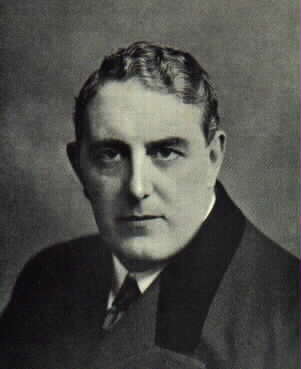
Cheiro
Cheiro
1866–1936 · Dublin, Ireland
Society palmist, astrologer, numerologist

Born William John Warner in Dublin, he took the stage name Cheiro — from cheiromancy, the old word for palmistry — and, later, an invented title: Count Louis Hamon. By his own account he learned palmistry, astrology, and Chaldean numerology from a Brahmin teacher in India as a young man, then returned to London to build a practice reading the hands of anyone who could afford him.

He became the most famous society palmist of his era, working London, New York, and eventually Hollywood, and kept a guest book of sitters who signed their names beside a comment on the reading. His lasting technical contribution is the timing grid still used to anchor predictions to a sitter's age, and a classification of hand shapes that most palmistry writers after him kept using. He was also, by his own account, a showman — so Palmist takes his framework seriously and his certainties less so.

Books
Cheiro's Language of the Hand (1894)Cheiro's Guide to the HandYou and Your HandPalmistry for All (1916)Cheiro's Book of NumbersCheiro's Memoirs: Reminiscences of a Society Palmist
Famous hands he read
Mark TwainOscar WildeSarah BernhardtKing Edward VIIThomas EdisonLord KitchenerJoseph ChamberlainGrover ClevelandW. T. SteadMata Hari

All ten are collected, with the original readings, in the Famous Hands archive.

No verified public-domain
portrait found
Fred Gettings
United Kingdom
Art historian and writer on the occult

Gettings came to palmistry as a historian rather than a practitioner. His major work, The Book of the Hand: An Illustrated History of Palmistry (1965), traces the tradition from antiquity through the classical texts to his own century, weighing which claims actually survive scrutiny and which were simply repeated from book to book. He is the most careful of the three about the line between what can be observed in a hand and what has merely been asserted about it.

Outside palmistry he wrote widely on esoteric and art history — occult symbolism in painting and sculpture, the sigils of alchemists and astrologers, and a well-regarded study of the illustrator Arthur Rackham. Where a reading in Palmist sounds hedged, it is usually because Gettings hedged first.

Books
The Book of the Hand: An Illustrated History of Palmistry (1965)The Hidden Art: A Study of Occult Symbolism in ArtSecret Symbolism in Occult ArtDictionary of Occult, Hermetic and Alchemical Sigils (1981)Arthur Rackham (biography)
Famous hands he read

Gettings wrote as a historian, not a society palmist — his record is a critical survey of the tradition itself, not a list of sitters.

No verified public-domain
portrait found
Mir Bashir
b. 1907 · Kashmir, British India
Professional palmist

Bashir was born in Kashmir in 1907 and moved to London in 1948, where he became the city's leading professional palmist for decades. His approach was closer to fieldwork than showmanship: he built a library of more than fifty thousand handprints and worked alongside physicians and criminologists studying what a hand could reliably show and what it couldn't.

He wrote in both English and Urdu — his first book, How to Read Hands (1955), appeared in Urdu as Ramoz-i-dust shunasi — and his later The Art of Hand Analysis (1973) is the most attentive of the three to minor signs: islands, chains, breaks, sister lines, and how they change in a hand over a life. He's also part of why Palmist offers readings in Roman Urdu and Urdu, not only English.

Books
How to Read Hands (1955)Ramoz-i-dust shunasi — Urdu edition of How to Read HandsThe Art of Hand Analysis (1973)
Famous hands he read

Bashir's record is the handprint library, not a roster of names — decades of casework rather than celebrity sittings.

See the full Famous Hands archive →

Palmist is built to be honest about what it is: it reads your hand against these three books, and always tells you which book it is reading from.